
List of artists / about the Festival / workshops
The eighteenth edition of the Podlasie Octave of Cultures is on the way!
Thank you for celebrating the festival of music, dance and tradition with us.
Podlasie Octave of Cultures 2026 has officially come to an end. From 16th to 19th July, we have together experienced a festival centered around multiculturality of Podlasie region.
Podlasie Octave of Cultures, like every year, began with the POKtańcówka at Młynowa Street, where Drëszë, Non-family Folk Band Ostrowscy, Kapela Fedaków and Warsaw-Lublin Brass Band played for dancing. In the following days many concerts took place on the main stage at Kościuszko Market Square. Vocal-dance workshops were very popular as well. During these classes everyone could learn Silesian and Pomeranian folk dances, traditional Kashubian dances and more. A novelty of this year’s festival was the Little Octave – a gig to which we invited especially families with children. Kids, parents and grandparents had a great time listening to live music performed by Kapela Fedaków and Kapela Niwińskich.
On our stages performed the artists from Poland, France, Bosnia and Hercegovina and Ukraine. Our invitations were accepted by bands drawing inspiration from their regions’ unique tradition as well as Polish borderland folklore. Every performance was a musical tale of memory, community and importance of preserving the cultural heritage. The gigs proved that the tradition often inspires beautiful art. Many of this year’s performers combine past and contemporary sounds in their works. Old melodies intertwining with modern music resulted in outstanding compositions.
Podlasie Octave of Culture was not limited to Białystok only! The gigs took place in Wojewodzin, Płociczno-Osiedle (in Suwałki municipality), Wąsosz, Choroszcz, Goniądz, Siemiatycze and Stawiska as well. We would like to thank the community centers in these cities for helping us organize the festival. We are very happy that all the gigs were so warmly received.
We are grateful to all the artists, instructors and participants, as well as partners, patrons, media patrons and all the other people involved in organization of this year’s Podlasie Octave of Cultures. We are glad to be able to carry out such an important and highly anticipated event. Huge thanks to the audience, which never fails to warm the festival up.
We would like to invite you to see the gallery of photos from every day of the Octave.
This year’s edition of Podlasie Octave of Cultures took place under the Honorary Patronage of the Member of the Polish Sejm Krzysztof Truskolaski, Honorary Patronage of the Marshall of the Podlaskie Voivodeship and Honorary Patronage of the President of Białystok. National Institute of Dance and Music also took the patronage over the festival. The partners of the Octave were Totalizator Sportowy Lotto, Młynowa and Podlaskie Museum. The media partners were Polskie Radio Białystok, TVP3 Białystok, Białystok Online, KulturaLudowa.pl and Pismo Folkowe.
About the Festival
This festival of music inspired by tradition and tradition expressed with dance and singing is organized by Podlaski Institute of Culture in Białystok.
This year’s edition of the festival will begin on July 16 and will last four days, until July 19. Like every year, on the first day of Octave we are organizing a dance on the Młynowa street. Four bands will perform there: Drëszë, Non-family Folk Band Ostrowscy, Kapela Fedakow and Warsaw-Lublin Brass Band. You can get to know them (and many others) on our website.
The following days of the festival will also bring many attractions. On the Kościuszko Market Square (pol. Rynek Kościuszki) folk bands from France, Bosnia and Herzegovina, Ukraine and almost every region of Poland will perform. The gigs will be diverse yet connected by the focus on tradition and cultural heritage of local homelands, which all our guests want to preserve and popularize. The festival is a great opportunity to show the artistic outcomes of their work towards that goal.
This year twenty bands accepted our invitation to perform at the Octave. On the stage you will see Dr Mladen Stojanovic, one of the oldest folk bands from Bosnia and Herzegovina, Guilhem Desq, a French artist combining traditional hurdy-gurdy with contemporary music, Gerdan Theater, Ukrainian band entwining music and theater play, and many, many others.
The gigs will take the audience on a musical journey. A journey, which will allow everyone to get to know the rich culture of Polish borderland and the extensive heritage of other European countries.
A novelty of this year’s Octave will be a Small Octave – that’s how we called an open-air concert which will take place on a stage set in front of our headquarters on 14 św. Rocha Street. Kapela Fedaków and Kapela Niwińskich will perform there. Everyone passionate about folk dance and traditional songs should undoubtedly check out the workshops organized within the framework of the Octave. They will be a great opportunity to learn traditional Kashubian songs and folk dances from various regions of Poland, such as Silesia and Pomerania. The classes will be conducted by the bands performing at the festival: Drëszë, Kapela Fedaków, Szczecin Region Song and Dance Ensemble “Krąg” and Fryderyka and Piotr Zgorzelski.
Admission to all concerts is free. The workshops are also without charge, but you need to fill out an application form beforehand.
Podlasie Octave of Culture will not be limited to Białystok only! We planned gigs in Wojewodzin, Płociczno-Osiedle (in Suwałki municipality), Wąsosz, Choroszcz, Goniądz, Siemiatycze and Stawiska.
This year’s edition of Podlasie Octave of Cultures takes place under the Honorary Patronage of Member of the Polish Sejm Krzysztof Truskolaski, Honorary Patronage of the Marshall of the Podlaskie Voivodeship and Honorary Patronage of the President of Białystok. National Institute of Dance and Music has also taken the patronage over the festival. The partners of the Octave are Totalizator Sportowy Lotto, Młynowa and Podlaskie Museum. The media partners are Polskie Radio Białystok, TVP3 Białystok, Białystok Online, KulturaLudowa.pl and Pismo Folkowe.
List of artists
Twenty bands accepted the invitation to the festival.
Chor der Neidenburger Gesellschaft der Deutschen Minderheit – Saturday, July 18, 17:05-17:30
Society of German Minority Choir was established in 1994 as a vocal group. The singers’ ambition was to cultivate and popularize local musical heritage of German minority. The choir tries to establish and maintain intercultural dialogue between polish and German society. The singers often perform at local festivals and artistic events. Their repertoire consists of past and modern folk, patriotic and religious songs, performed in Polish as well as in German language. The choir has released three albums so far.
Czarnina – Sunday, July 19, 20:25-21:15
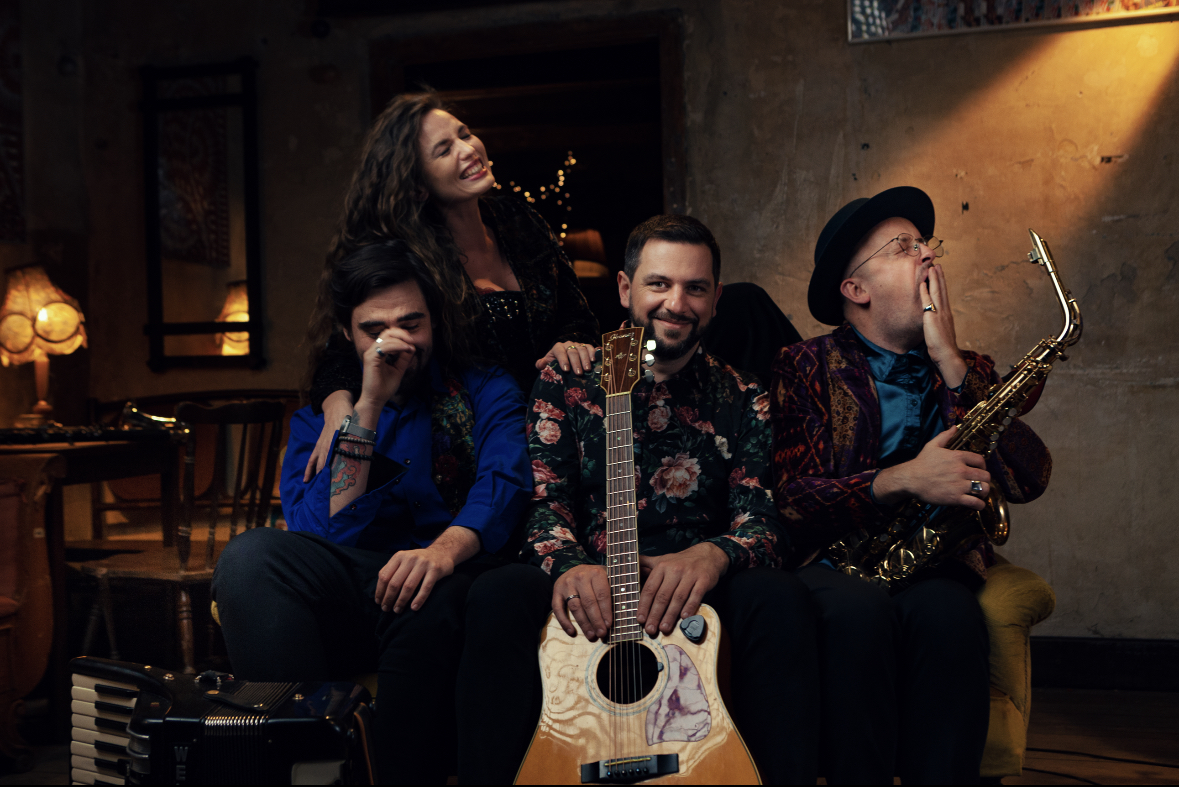
The band consists of four artists, whose style and vision have been recognizable for years. Their ambition is establishing a multicultural dialogue, and their creative collaboration results in a stunning musical journey in which tradition plays a leading role. In its art Czarnina draws from Polish folk culture, simultaneously opening it to Romani, Balkan and Middle Eastern heritage. The band invites the audience to a dialogue, shows them a whole range of emotions amplified by original interpretations of traditional songs and an unobvious musical vocabulary. All of these serve as an incentive to enter broad worlds of tradition by listening to each other, because these worlds only seem to be far away.
“Dolina Popradu” Folk Band – Friday, July 17, 18:05-18:45
The band performs since 1965. For years it has been popularizing cultural heritage of Highlanders Nadpopradzcy (also referred to as Black highlanders), who live in lower Poprad region. In their tradition clear signs of multiculturalism and polyethnicity can be seen, which is no surprise at the crossroads of northern and southern Karpaty. Highlanders Nadpopradzcy are also distinguished by their dark woolen clothes. Since its inception, the band explores and carefully documents its native folklore, which results in very credible and one-of-a-kind performances. “Dolina Popradu” won many prestigious awards for cultivating local heritage. One of the most important goals of the band is shaping the future through care of the past and tradition.
Drëszë – Thursday, July 16, 18:00-18:50; Kashubian songs workshop, Friday, Spodki
(14 św. Rocha Street), 15:00-17:00
The name of the band means “friends” in Kashubian. The group consists of four musicians from Tri-City who share a passion for folk, traditional and jazz music. Band leader, Joanna Gostkowska, for years has been reviving Kashubian folk songs and instrumentals. She is a Kashubian herself. Drëszë present original lyrics and music, enriched by contemporary accents. Band aims to protect the meaning and authenticity of Kashubian tradition from oblivion. Pieces making up their repertoire originate from archival recordings, many of which were discovered by the musicians during their field expeditions. “Drëszë” performed at many festivals and won numerous awards.
FiśBanda – Friday, July 17, 21:20-22:20
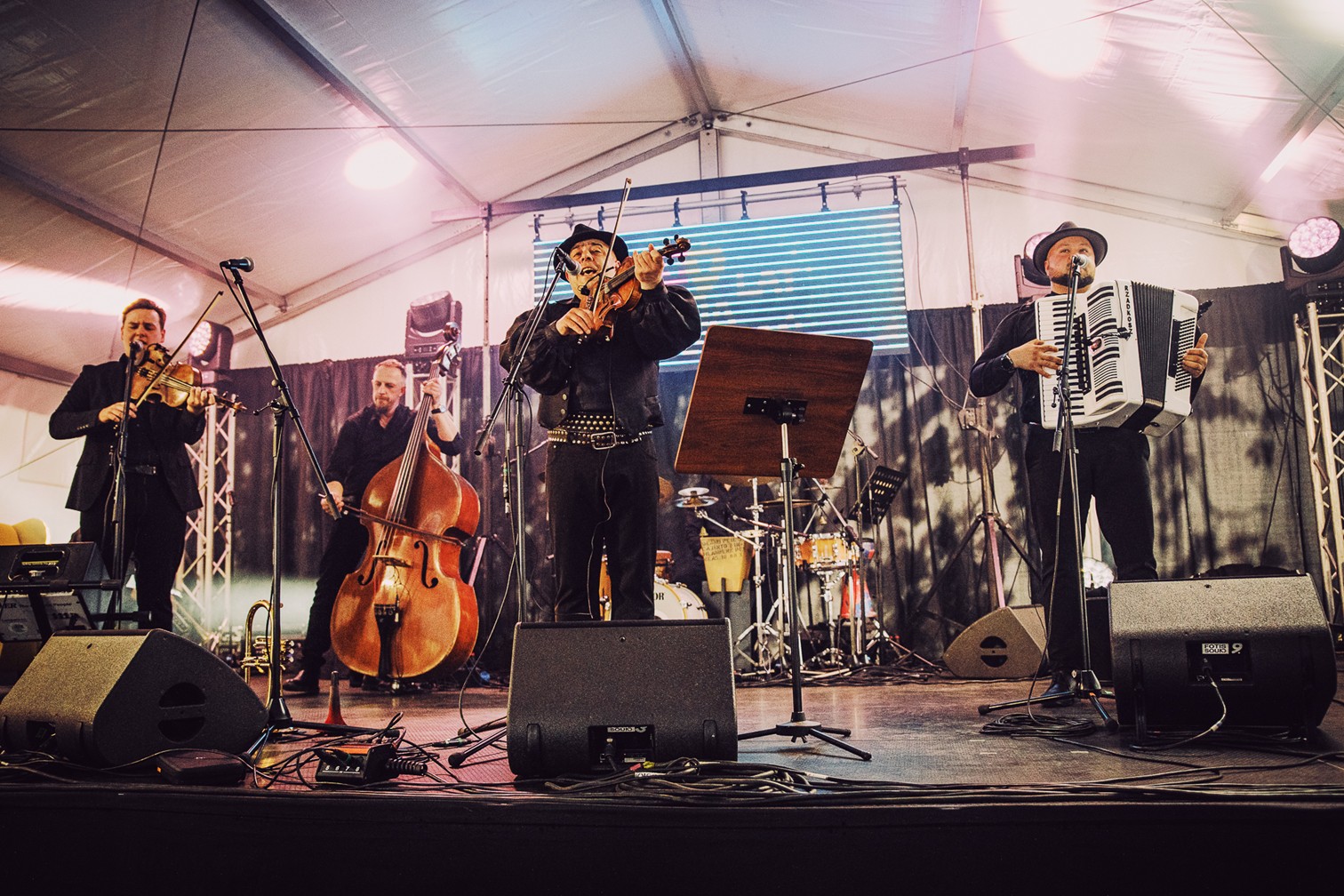
The band was established in 2018 on the initiative of musicians from Podhale, a mountain region in southern Poland. Shared tradition and a will to popularize folk culture of the Tatras (which they know very well) brought them together. They often perform traditional songs, but their repertoire contains original compositions as well. FiśBanda is best characterized by its vivacity and creativity which drive artists’ search for new, oftentimes surprising and interesting interpretations of traditional music. The musicians draw inspiration from dynamic songs originating from Slovakia, Ukraine, Hungary and Romania, but Klezmer and Romani influences can also be found in their works. The band consists of a violin, played by band leader, Andrzej Fiś Jarząbek, viola, double bass, accordion and drums. During the gigs, the musicians are aiming to present to the audience not only the sounds, but also a variety of emotions and beauty that one can feel and see in the mountains.
“Kurpie Zielone” Song and Dance Ensemble and Ot!Głosy vocal group – Sunday, July 19, 19:10-20:10
One of the oldest groups presenting folklore in stylized and scenic forms in Poland. It operates in Podlaski Institute of Culture in Białystok. Its repertoire shows multiculturality and polyethnicity of Poland. The group presents folklore originating not only from Podlasie, but also regions such as Spisz, Orawa, Żywiecczyzna, Ziemia Sądecka, Beskid Niski and many more. The band draws from folk culture and national heritage, which it contextualizes for the stage, endlessly looking for new inspirations. An inherent part of the band is a vocal group Ot!Głosy, for six years operating under the direction of Marta Szałkiewicz. Group’s search for new forms of musical expressions resulted in an album called On the Other Side of the Lake released this year. It consists of both traditional pieces and songs combining folklore with modernity, jazz and electronic music.
Kapela Fedakow – Folk Band – POKtańcówka, Thursday, July 16, 20:00-20:50; Silesian dance workshop for adults, Friday, Spodki, July 17, 15:00-17:00; family workshop, Saturday, 12:00-13:30, Little Octave, Saturday, July 18, 14:00-16:00
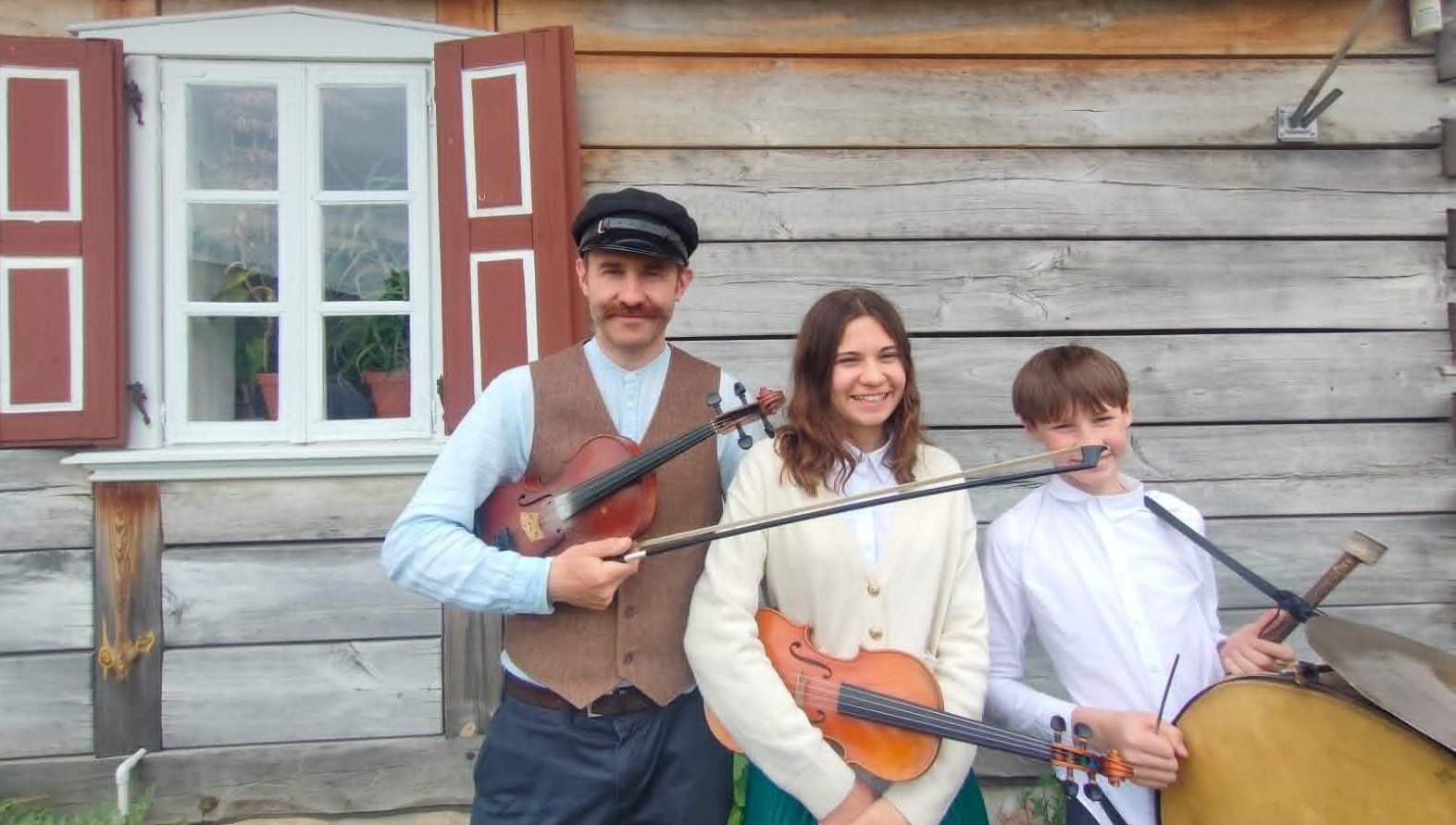
This family band from Katowice popularizes traditional music from Silesia and other regions of Poland. The artists constantly re-discover Polish folklore both for themselves and the audience. They often present their own compositions as well, all of which are inspired by folk heritage. During their gigs and workshops the band members are able to win the audience over thanks to their talent, knowledge of folklore and an original sense of humor. The artists can easily engage spectators in an artistic dialogue. In their work they combine respect for the tradition with their own interpretation and interesting arrangements of presented pieces.
Kapela Niwinskich – Folk Band – Little Octave, Spodki, outdoor scene, Saturday, July 18, 14:00-16:00
The band draws inspiration from traditional music from central and southeastern Poland, especially from Powiśle Maciejowickie and Kajoks’ microregion. The artists created their repertoire looking for recordings and sheet music in the archives. They display the spontaneity typical for the old-time barn dances. During the gigs the audience can hear many traditional polish dances such as obereks, mazurkas or polkas, as well as ritual music. The band often performs at local festivals. The artists revive old musical traditions with great success, and their ingenuity is always heavily praised by the audience.
KOSY – Saturday, July 18, 20:10-21:10
In its art the band combines traditional folk motives with World Music and original compositions. The musicians often refer to old-time songs, ritual melodies and ancient Slavic beliefs, very well connecting the past with the present. They are aware of how much emotion and how many great stories one can find in traditional music passed down through generations. They present this unique heritage processed through their musical imagination during their gigs, at which, apart from four female singers, the audience can hear frame drums, violins and many unusual percussion instruments.
Non-family Folk Band Ostrowscy – POKtańcówka, Thursday, July 16, 19:00-19:50
The band performs music from the Świętokrzyskie-Cracow borderline. The musicians play regional instruments: violin, clarinet, trumpet, double bass and accordion. Since their debut in 2024, they performed on a variety of folk festivals and traditional music contests. Their repertoire, formed mostly during field studies, consists of vibrant and dynamic polkas, obereks and cracoviennes, as well as regional short folk songs. In the archives, the musicians found many beautiful yet little-known songs from Ponidzie and Ziemia Jędrzejowska regions. This area connects two regions, Świętokrzyskie and Lesser Poland, both geographically and musically. Non-family Folk Band Ostrowscy won many prizes, and its gigs always make the audience dance.
Sekunda&Company – Friday, July 17, 19:00-20:00
A violin and vocal duet consisting of Dorota Błaszczyńska-Mogilska and Wiola Jakubiec. The artists draw inspiration from traditional music of the Żywiec Beskids and Spisz. Their art is an intriguing fusion of folk music with jazz, electronic music and other contemporary sounds. The artists sing and play various instruments, combining tradition with brave convention defiance. Most often they play baritone violins, but also use traditional pastoral instruments such as tin whistles, Lenten pipes (simple, wooden whistles) and zbyrcoks (pastoral bells). Violinists’ original interpretations of folk music are heavily praised by the audience and judges at folk music competitions, where the band has won many prestigious prizes.
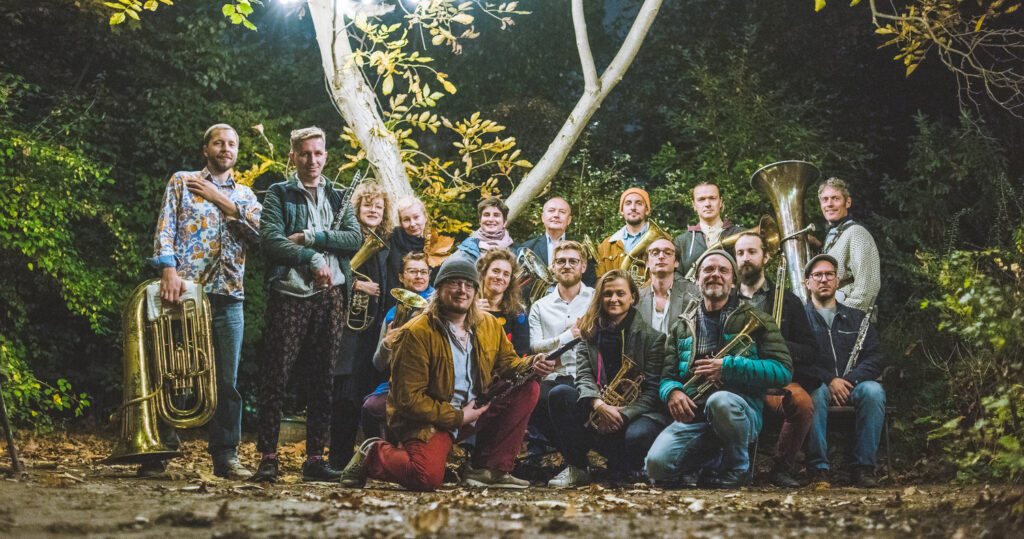
Warsaw-Lublin Brass Band – POKtańcówka, July 16, 21:00-22:00; Sunday, July 19, 17:05-17:40
The band was established in 2017 in Warsaw in the Traditional Music Embassy. The artists were inspired not only by archival recordings, but also by meetings with some of the last Lublin brass bands that to this day play live for dancing in the Roztocze region. Band members try to preserve the tradition that sadly slowly fades away. Their repertoire consists of foxtrots, tangos, obereks and waltzes. The artists learn a lot from brass bands that are still active in Zdziłowice and Goraj, many of their pieces were also found during the field studies conducted in Roztocze region. The band performed not only in Poland, but also in many other European countries, always able to win the audience over with their beautiful music.
Szczecin Region Song and Dance Ensemble “Krąg” – Saturday, July 18, 19:15-19:45
The band was established in 1969 in Szczecin and is based there to this day. Its members are mostly young people, who enter the world of folklore with interest and enthusiasm. One of the band’s crucial goals is showing the folk culture as authentic as possible. Its repertoire consists of traditional Polish national dances as well as dances and short folk songs from Łowicz, Lublin, Cracow, Rzeszów, Kashubia, Kurpie Green Forest, Silesia, Spisz and Nowy Sącz. During its gigs, the ensemble is accompanied by a folk band consisting of a dulcimer, trumpet, clarinet, violin and double bass. Krąg is currently a representative band of West Pomerania and gladly performs at numerous festivals and competitions, where it has already won many awards.
Song and Dance Ensemble “Suwalszczyzna” – Saturday, July 18, 19:15-19:45; a gig with Song and Dance Ensemble “Kurpie Zielone”, Saturday, July 18, 19:45-19:55
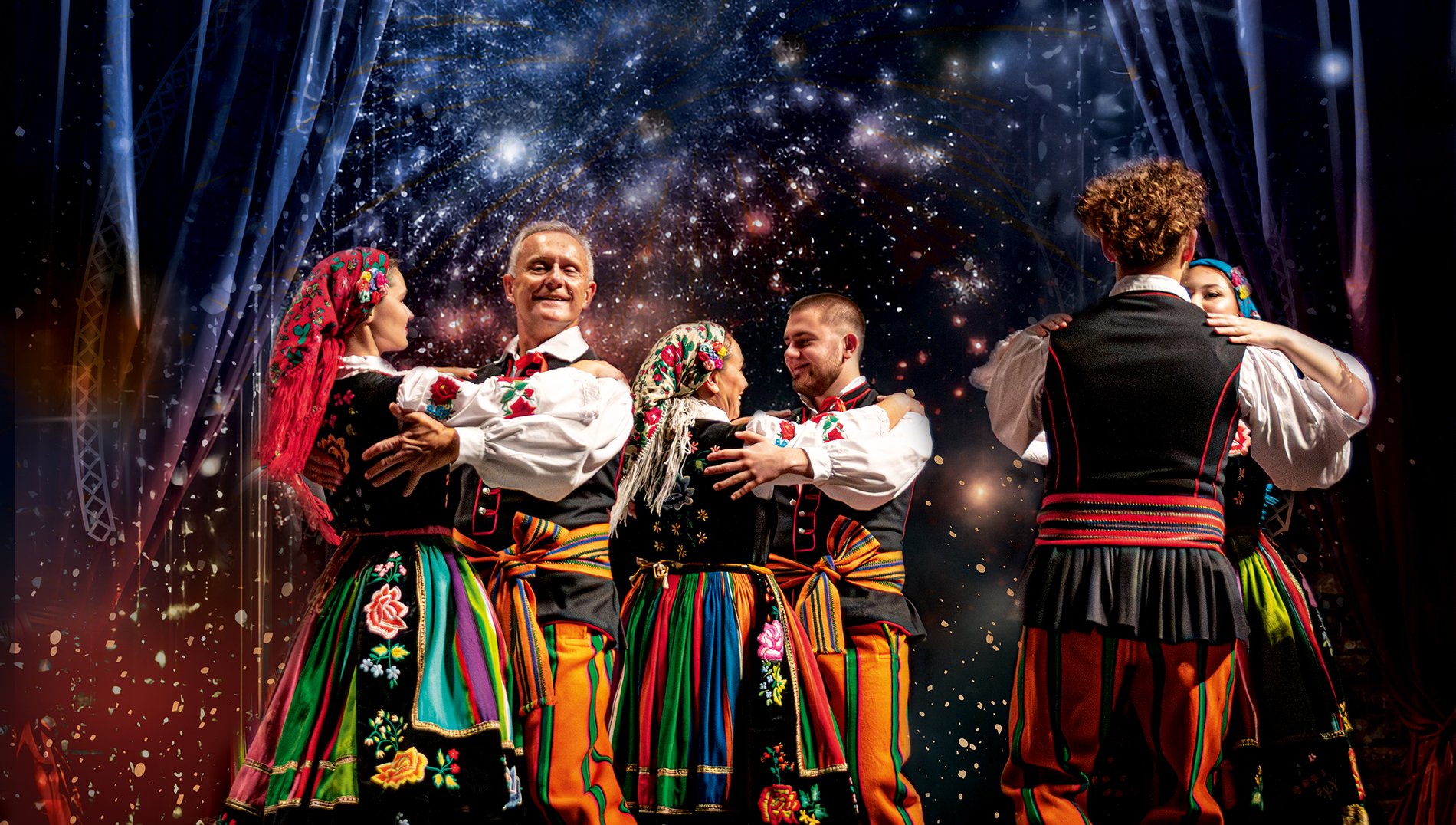
One of the oldest folk groups in Poland. It was established in 1969 and since then has been popularizing local traditions, attracting whole generations of dancers and musicians. Its repertoire consists of folk songs and dances not only from various regions of Poland and Lithuania, but also Flemish Region. Other than that, Suwalszczyzna also has two dance-theater shows in store. Currently the band operates under the direction of Robert Śliżewski. In their newest show, the dancers present dynamic Hutsul and Lublin dances, Rzeszów suite and many more interesting choreographies, which combine tradition with scenic bravery. Suwalszczyzna performs accompanied by a folk band.
Fryderyka Zgorzelska i Piotr Zgorzelski – Friday, July 17, Saturday, July 18, traditional dance workshop, Spodki, 10:00-14:00
An animator, ethnologist and actor, who has for years been preserving Polish traditional dances in non-scenic forms, keeping them in cultural awareness. He established Traditional Dance Academy, and within its framework regularly conducts classes across the whole Poland. He learned his craft gathering advise directly from folk dancers and using archival recordings. He developed his own dance learning methodology, which considers individual predispositions of those who don’t have a chance to experience authentic folklore. He is able to pass to his students not only valuable skills, but also his passion. For almost a decade he has been a bassist and dancer in Janusz Prusinowski Kompania folk band.
SKUD “Dr Mladen Stojanovic” – Friday, July 17, 20:15-21:00
One of the oldest folklore groups in Bosnia and Herzegovina, established in 1885 in Prijedor. Its wide repertoire of over 50 dance routines shows region’s cultural heritage. The group consists of dancers, singers and a folk band. The artists have an impressive collection of over 480 various beautiful traditional clothes, which as well as dances and music are carriers of the tradition. The group often performs both at national and international festivals; it has won many prestigious prizes. Everywhere they go, the artists win the audience over with spectacular, vibrant, memorable and colorful gigs.
Gerdan Theatre (Ukraine) – Sunday, July 19, 21:35-22:35
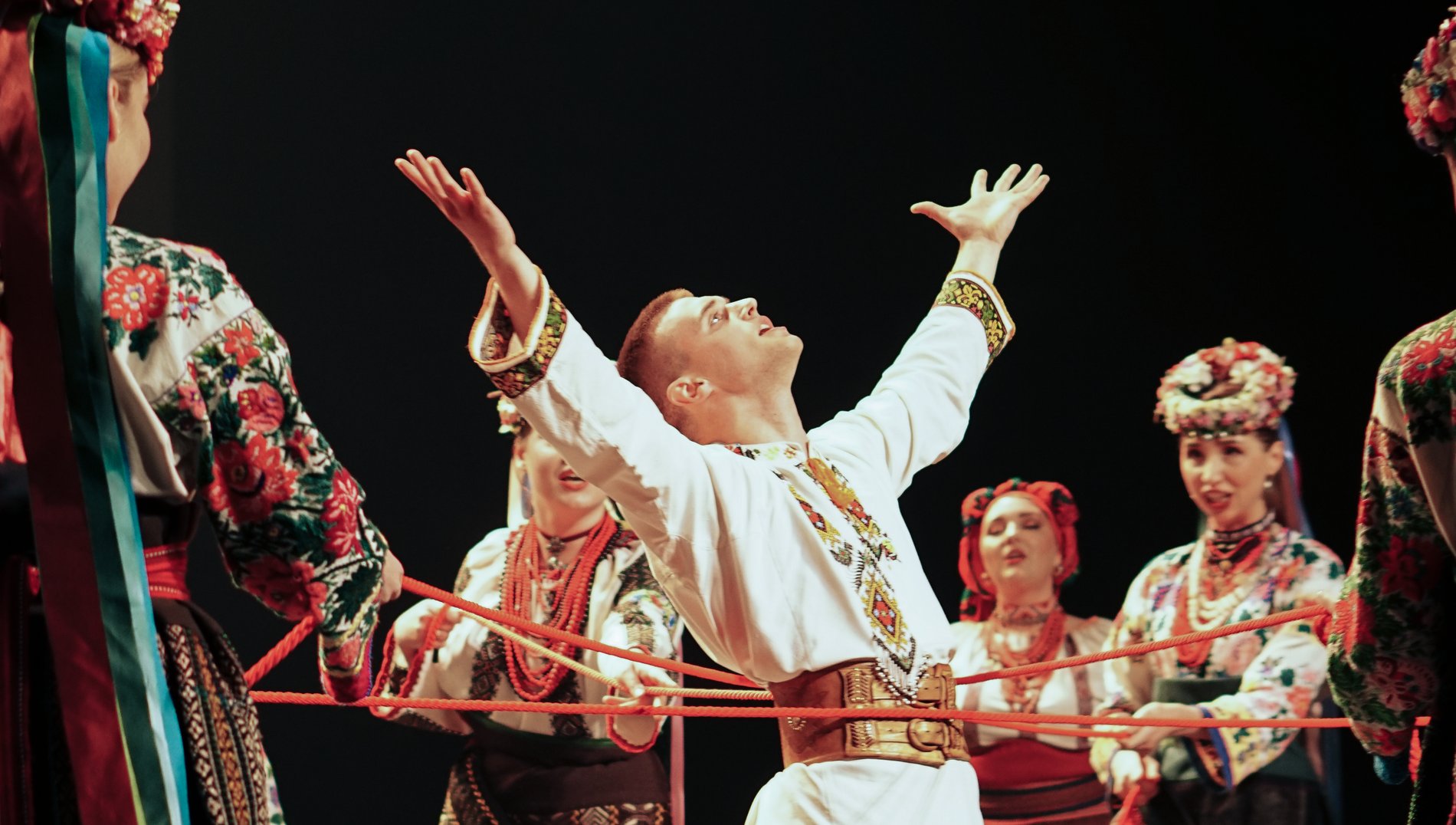
Ukrainian band operating for over three decades. Their art is an extraordinary mix of music and theatre play. The artists invite the audience to an intriguing world of ancient Ukrainian beliefs and rites, illustrated with moving folk songs performed in band’s own arrangements. Gerdan Theatre offers a deeply reflective, sometimes surprising perspective on Ukrainian cultural heritage. During their gigs the artists bravely show clearly noticeable yet very individual emotion.
Guilhem Desq – Saturday, July 18, 21:21-22:25
An artist from France, who has proven that a hurdy-gurdy, an instrument known for centuries, still holds many possibilities. He combined its sound with electronic music, creating an amazing, hypnotizing sound. During his musical journey he pushes progressively further boundaries of artistic search. He entwines folk sounds of a hurdy-gurdy with house or even heavy metal music. Desq collaborated with numerous musicians, wrote music for short films and international projects and performed almost all over the world. His first solo album, called Visions was released in 2017.
“Warmia” Vocal Group – Saturday, July 18, 17:40-18:05
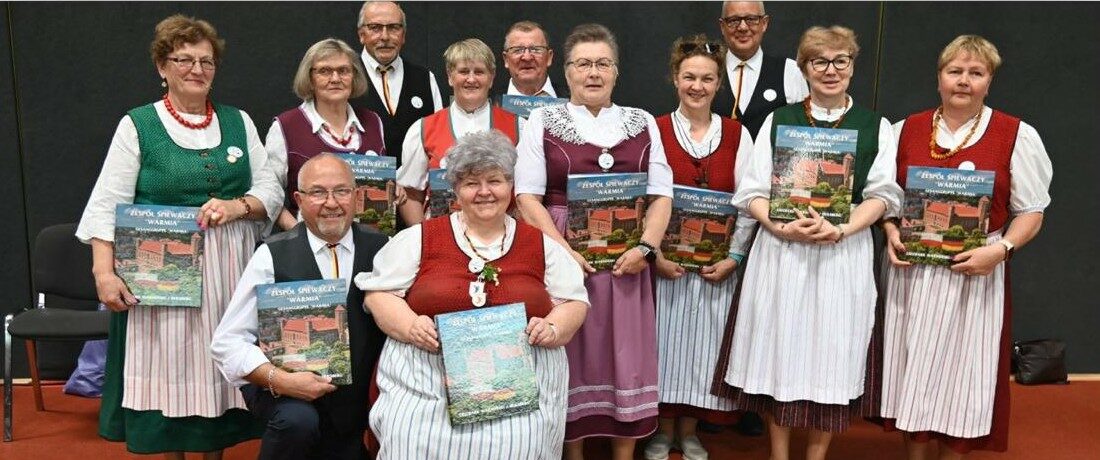
This band from Lidzbark Warmiński (northeastern Poland) was established in 1993. It consists of members of German associations working towards preserving cultural heritage of former East Prussia, as well as other German-speaking countries. The artists popularize and cultivate the culture of Warmia and Masuria, fully aware of its originality. They also aim to establish a multinational dialogue, believing that music can best bring out what’s common and amaze with what’s unique. The group often performs at festivals in Poland; it also gigs in Germany. So far, the band has released three albums.
Dariusz Wójcik & Szaweł Lipski Quartet – Sunday, July 19, 17:55-18:55
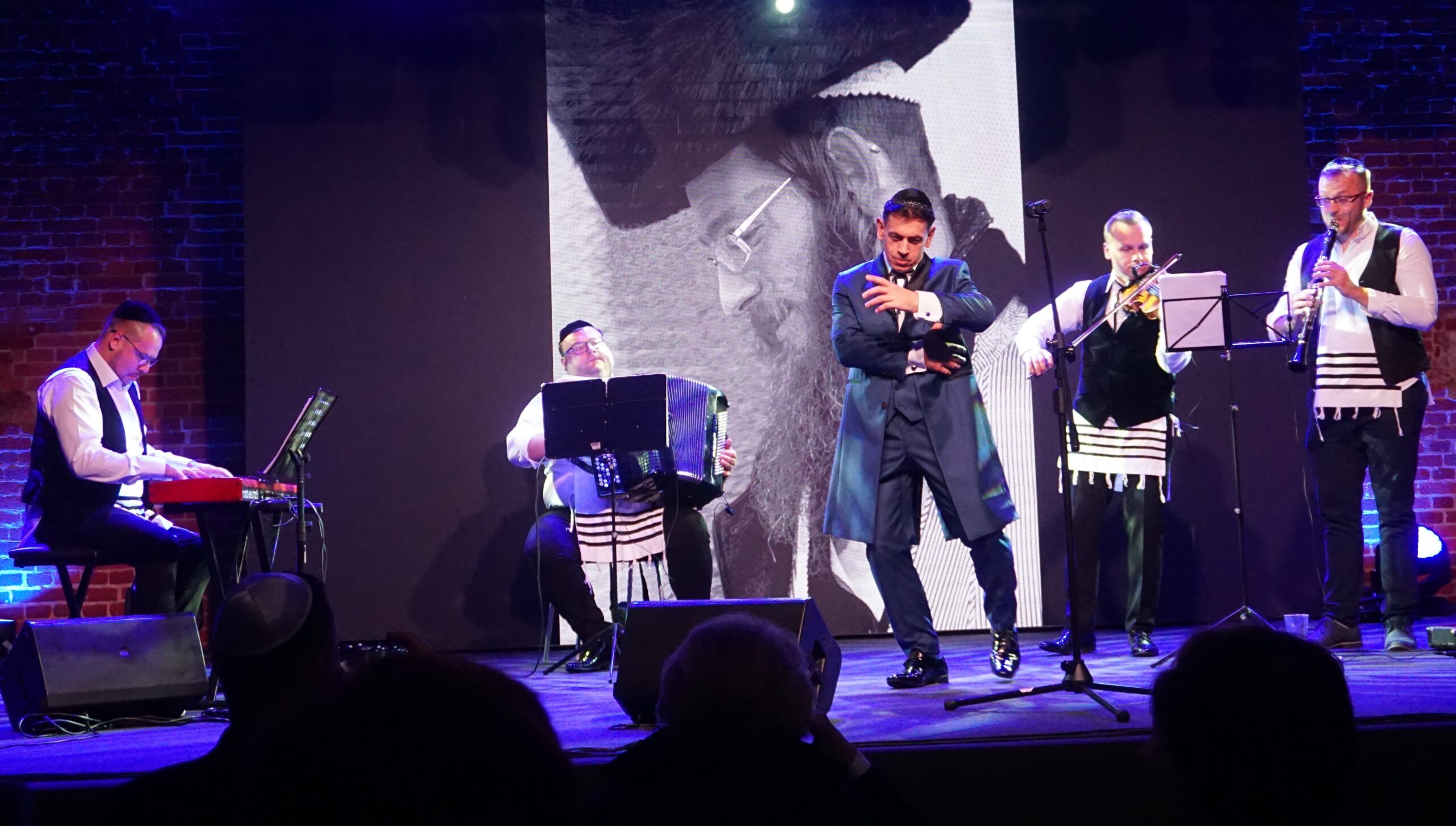
Dariusz Wójcik is an actor, vocalist, director and organizer of cultural activities passionate with Jewish music. He can very well capture its unique character and richness. He performs the pieces with great awareness, largely thanks to pronunciation and interpretation classes he was given by Efraim Kisler, of blessed memory – a publicist and keeper of Jewish culture from Gdansk, who participated in Białystok Ghetto uprising. Dariusz Wójcik performed all over the world – he has for years been a soloist in Gdynia Musical Theater, he also collaborated with Baltic Opera in Gdansk. He is especially proud of his Broadway performance in Polish version of Jesus Christ Superstar.
Traditional Song and Dance Workshop
The workshops are free of charge, but registration through the application forms is required.
We invite everyone passionate about traditional songs and dances to take part in the workshops organized as a part of the Polasie Octave of Cultures. During the classes we will get to know Kashubian folk songs and traditional dances from various regions of Poland, such as Silesia and Pomerania. Th workshops will be conducted by the bands performing at our festival: Drëszë, Kapela Fedaków, Szczecin Region Song and Dance Ensemble “Krąg” and Gryderyka and Piotr Zgorzelski.
“Oberek-Polka 101” – Two-day workshop of traditional dances in the non-scenic forms (adults only)
Instructors: Piotr Zgorzelski, Fryderyka Zgorzelska
Date:
part 1: July 17, 10:00-14:00
part 2: July 18, 10:00-14:00
Place: Conference Spodek in Podlaski Institute of Culture headquarters, 14 św. Rocha Street.
Class capacity: 50
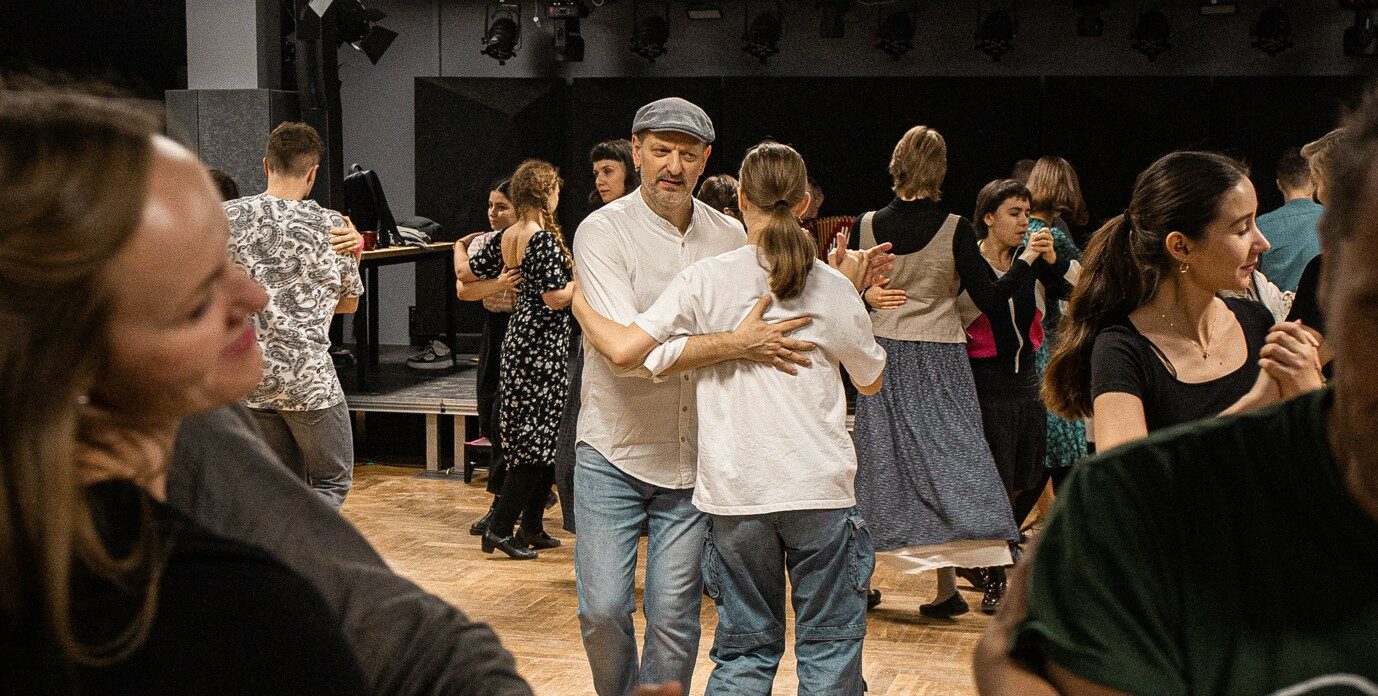
Traditional dance workshop, during which you will get to know the basics of obereks and polkas as well as fundamental rules of non-scenic folk dance. You will learn how to effortlessly dance and spin in pairs, move in a circle and perform simple embellishments typical for mazurka and polka rhythms. During the workshop we will focus on developing smoothness of motion, sense of rhythm and improvisation skills, so you can have fun on every (not only barn) dance. We will dance to the melodies originating from many different regions of Poland, taking inspiration from traditional style of old-time village dancers. On top of that, we prepared various rhythm exercises for you.
Piotr Zgorzelski – an animator, ethnologist and actor, who has for years been preserving Polish traditional dances in non-scenic forms, keeping them in cultural awareness. He established Traditional Dance Academy, and within its framework regularly conducts classes across the whole Poland. He learned his craft gathering advise directly from folk dancers and using archival recordings. He developed his own dance learning methodology, which considers individual predispositions of those who don’t have a chance to experience authentic folklore. He is able to pass to his students not only valuable skills, but also his passion. For almost a decade he has been a bassist and dancer in Janusz Prusinowski Kompania folk band.
Silesian Dance Workshop (adults only)
Instructors: Kapela Fedaków
Date: July 17, 15:00-17:00
Place: Conference Spodek in Podlaski Institute of Culture headquarters, 14 św. Rocha Street.
Class capacity: 30
During the workshop you will get to know Silesian folk dances as well as traditions related to them. During the class you will learn a lot about the region, hear folk dance music, and, most importantly, be able to perform dances such as szpacyrpolka, trojok, rainlender or mietlorz. Not only will we learn basic dance steps, but also dive into different variants of traditional dances, try some improvisation and embellishments and work on cooperation within pairs – everything accompanied by live music.
Kapela Fedaków – this family band from Katowice popularizes traditional music from Silesia and other regions of Poland. The artists constantly re-discover Polish folklore both for themselves and the audience. They often present their own compositions as well, all of which are inspired by folk heritage. During their gigs and workshops the band members are able to win the audience over thanks to their talent, knowledge of folklore and an original sense of humor. The artists can easily engage spectators in an artistic dialogue. In their work they combine respect for the tradition with their own interpretation and interesting arrangements of presented pieces.
Kashubian Folk Songs Workshop
Instructors, Joanna Gostkowska, Drëszë band
Date: July 17, 15:00-17:00
Place: Multimedia Spodek in Podlaski Institute of Culture headquarters, 14 św. Rocha Street.
Class capacity: 20
The workshop will immerse you in the world of traditional Kashubian songs. We will draw from the archival sources – recordings, collections made by ethnographers and folklorists and materials gathered by the instructor Joanna Gostkowska. Not only will we learn the songs, but we also will work on developing vocal freedom, better diction and articulation as well as deeper body awareness. You will also hear stories about region’s history and culture, which will help you better understand the context of learned songs. Last but not least, we will teach you the basics of Kashubian language – its sound, pronunciation and orthography.
Drëszë – the name of the band means “friends” in Kashubian. The group consists of three musicians from Tri-City who share a passion for folk, traditional and jazz music. Band leader, Joanna Gostkowska, for years has been reviving Kashubian folk songs and instrumentals. She is a Kashubian herself. Drëszë present original lyrics and music, enriched by contemporary accents. Band aims to protect the meaning and authenticity of Kashubian tradition from oblivion. Pieces making up their repertoire originate from archival recordings, many of which were discovered by the musicians during their field expeditions. Drëszë performed at many festivals and won numerous awards.
Family Dance Workshops
Instructor: Kapela Fedaków
Date: July 18, 12:00-13:30
Place: Multimedia Spodek in Podlaski Institute of Culture headquarters, 14 św. Rocha Street.
Class capacity: 30
During the workshop children will get to know Silesian folk dances, songs and musical games. They will find out how did the life in the countryside look back in the day and discover traditional professions by performing dances like kowol, szewc, trojok or owczarek. The parents won’t be bored too! We prepared engaging musical games and plenty of inspirations for fun family time. All of this with the accompaniment of live music combined with brief stories of folk instruments, interesting both for kids and adults.
Kapela Fedaków – this family band from Katowice popularizes traditional music from Silesia and other regions of Poland. The artists constantly re-discover Polish folklore both for themselves and the audience. They often present their own compositions as well, all of which are inspired by folk heritage. During their gigs and workshops the band members are able to win the audience over thanks to their talent, knowledge of folklore and an original sense of humor. The artists can easily engage spectators in an artistic dialogue. In their work they combine respect for the tradition with their own interpretation and interesting arrangements of presented pieces.
Pomeranian Dance Workshop (adults only)
Date: July 19, 11:00-13:00
Instructor: Szczecin Region Song and Dance Ensemble “Krąg”
Place: Conference Spodek in Podlaski Institute of Culture headquarters, 14 św. Rocha Street.
Class capacity: 30
During the workshop we will get to know traditional dances of Western Pomerania – a region full of musical and artistic treasures. We will draw from the repertoire reconstructed and preserved by Song and Dance Ensemble “Krąg”, which has for years been re-discovering forgotten melodies, dances and folk traditions, bringing them back for the modern audience. Workshop’s participants will learn region-specific steps, rhythms and dance forms from Szczecin and Jamno. They will also get to know more about tradition and cultural heritage of Western Pomerania. Expect many games, working in pairs, learning basic dance figures and, most importantly, the joy of dancing.
Szczecin Region Song and Dance Ensemble “Krąg” – The band was established in 1969 in Szczecin and is based there to this day. Its members are mostly young people, who enter the world of folklore with interest and enthusiasm. One of the band’s crucial goals is showing the folk culture as authentic as possible. Its repertoire consists of traditional Polish national dances as well as dances and short folk songs from Łowicz, Lublin, Cracow, Rzeszów, Kashubia, Kurpie Green Forest, Silesia, Spisz and Nowy Sącz. During its gigs, the ensemble is accompanied by a folk band consisting of a dulcimer, trumpet, clarinet, violin and double bass. Krąg is currently a representative band of West Pomerania and gladly performs at numerous festivals and competitions, where it has already won many awards.











Translated by: Błażej Bobowik